
The Short Answer
In the Texas Hill Country, site conditions decide more than marketing does. On rocky or sloped lots, gunite (concrete) usually wins for structural flexibility and custom fit. Fiberglass can be great on flatter sites with easy access—but shells have fixed shapes/sizes and may need extra engineering or soil work on challenging terrain.
-
- Site suitability: limestone, slope & access
• Gunite: Built to the yard. Footings, steel, and shotcrete are tailored to retain slopes, bridge grade changes, and work around limestone shelves.
• Fiberglass: Best on flatter, well-accessed yards. Steeper grades may require over-excavation, engineered backfill, or retaining/decking that narrows cost and timeline differences with gunite.Hill Country tip: Before choosing, get a site-informed 3D design that shows elevations, drainage, and access paths.
- Customization & aesthetics
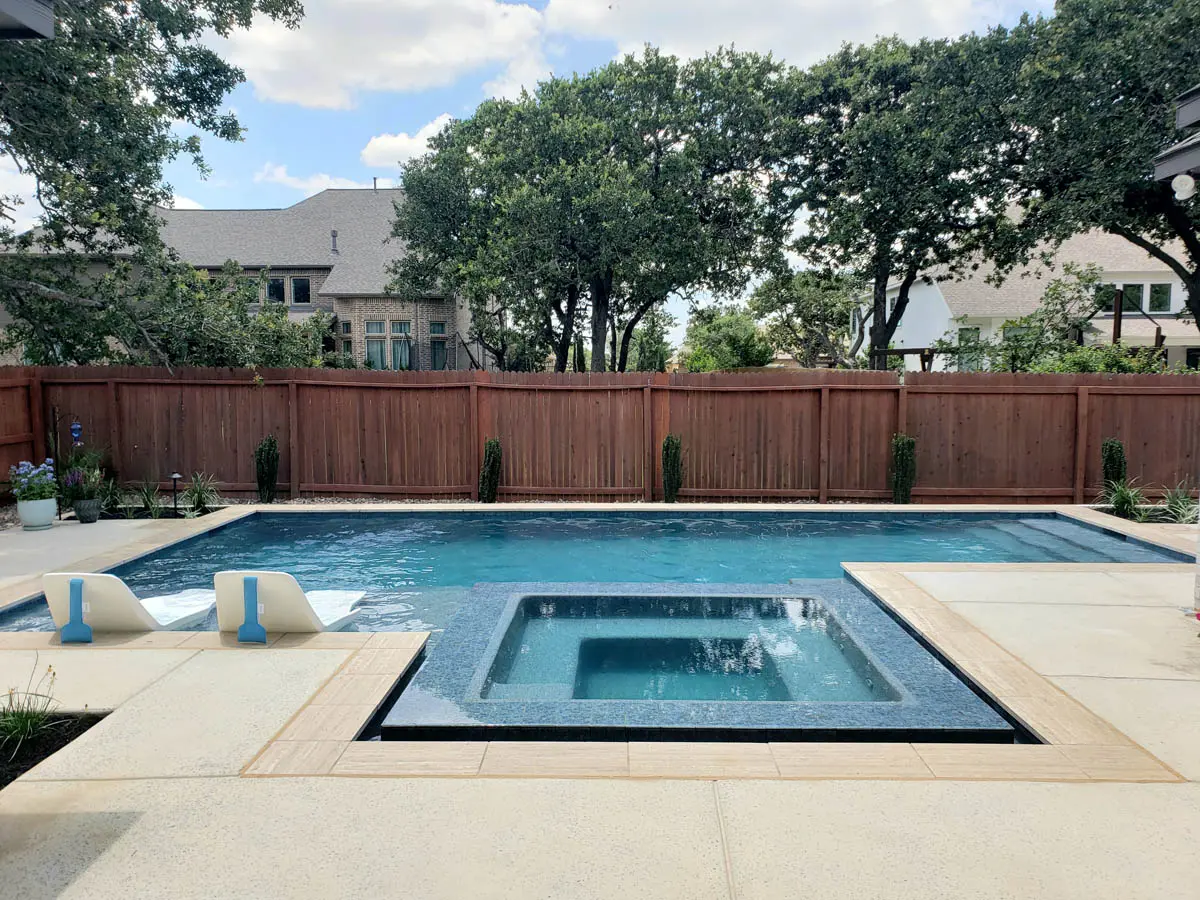
• Gunite: Any shape/size, exact tanning-ledge dimensions, integrated spa, vanishing edges, grottos/waterfalls, and material freedom (tile, plaster/pebble, coping, decking).
• Fiberglass: Faster and clean look, but fixed shell geometry limits ledge size, bench placement, and edge treatments. - Structure & longevity
• Gunite: Steel-reinforced shell designed for the site; ideal where soil and rock conditions vary within the same backyard.
• Fiberglass: Durable shell with gelcoat; sensitive to backfill and groundwater conditions—correct install is critical. - Timelines & permitting
• Gunite: Design + permitting + build can span multiple weeks; weather and inspections affect pour/shotcrete schedules.
• Fiberglass: Shell set is fast, but don’t forget site prep (access, crane, trenching) and decking/utilities—those can dominate the calendar on tough lots. - Cost reality (what actually moves your number)
For both options, the biggest movers are access, slope, utilities distance, and decking—not just the shell itself. On steep/rocky sites, the “fiberglass is always cheaper” assumption often evens out once you account for retaining, soil work, and custom hardscape. - Ownership & maintenance
• Gunite: Surface choices (plaster/pebble/quartz) influence feel, chemistry windows, and refinishing cycles.
• Fiberglass: Smooth gelcoat resists algae adhesion; chemistry discipline and correct startup protect the surface. - When fiberglass does make sense here
• Relatively flat yard with wide access.
• You love a specific shell that fits your space and lifestyle.
• You prefer a compressed install window and are okay with fewer design variables.
- Site suitability: limestone, slope & access
Quick Decision Checklist
- Is the lot sloped or limestone-heavy? → Lean gunite.
- Need a custom ledge/spa/water feature layout? → Gunite.
- Flat site, easy access, happy with a standard shell? → Fiberglass can work.
- Unsure? → Book a 3D design consult and compare a site-fit gunite concept vs. a shell that fits.
FAQ: Gunite vs. Fiberglass in Central Texas
Q1: Can fiberglass work on a sloped Hill Country lot?
Sometimes—with added engineering, backfill, or retaining. On steeper grades, gunite is usually more practical.
Q2: Which lasts longer—gunite or fiberglass?
Both can last for decades when properly built and maintained. Gunite shines for structural flexibility; fiberglass relies on correct subgrade/backfill.
Q3: Is fiberglass always cheaper?
Not on challenging sites. Access, slope, and decking can erase shell price differences.
Q4: Which is faster to install?
Fiberglass shell placement is quicker, but total project time depends on site prep, utilities, decking, and inspections.
Q5: What if I want a large tanning ledge and integrated spa?
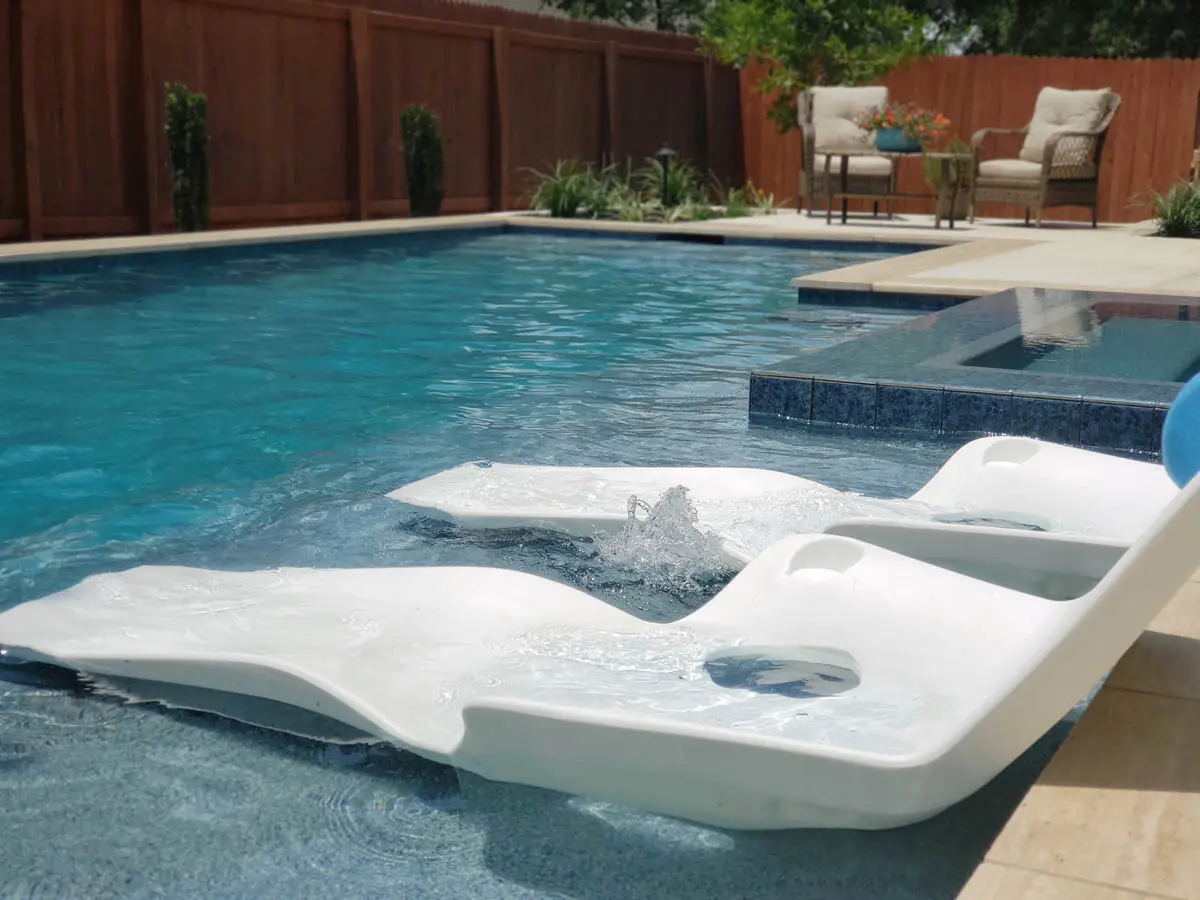
That level of customization generally points to gunite for layout freedom and hydraulic design.
Ready to See Your Backyard in 3D?
We’ll measure, model, and show you a build-ready plan—no surprises on cost and a timeline you can plan around.


