
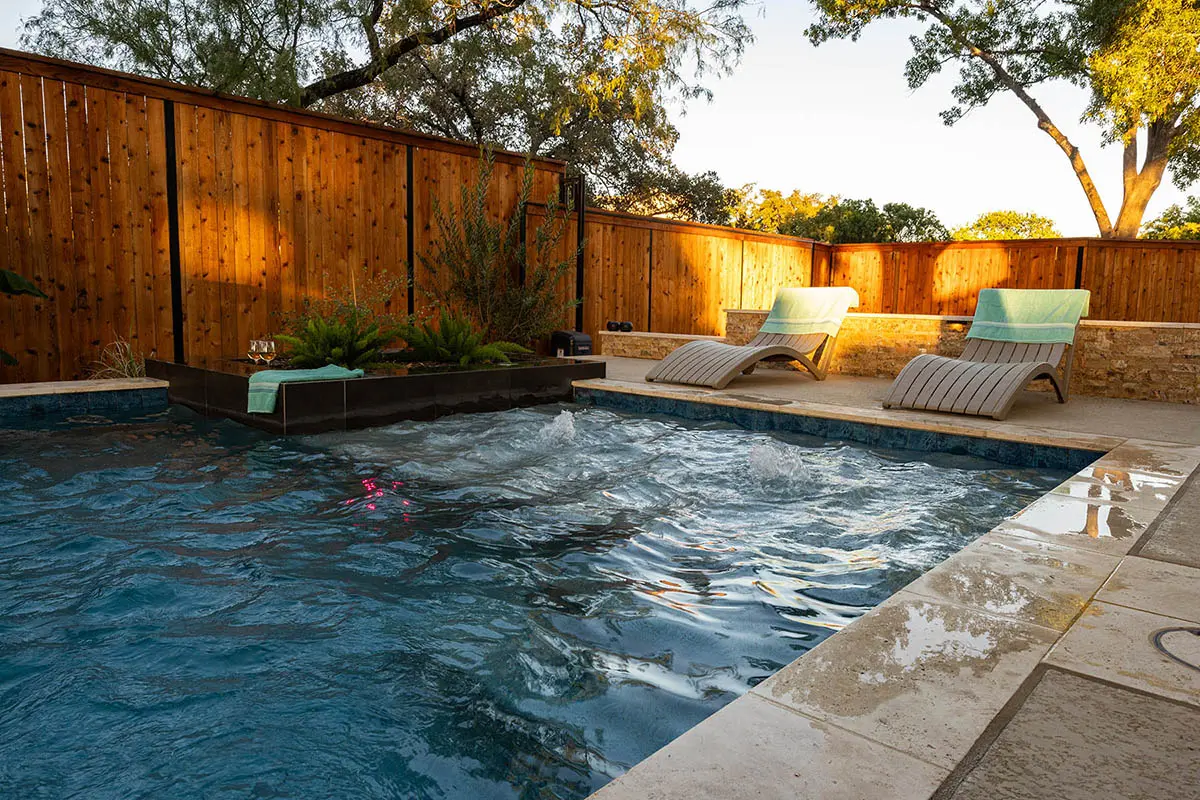
Why Decking Matters in Central Texas
Decking drives comfort (bare feet in summer), safety (slip), maintenance, and budget. The Hill Country’s heat and limestone terrain make the right pick even more important. Here’s how travertine, concrete pavers, and brushed concrete stack up for a real-world backyard.
Travertine (Natural Stone)
Best for: Premium look, cooler surface, timeless style.
- Heat/comfort: Stays noticeably cooler underfoot compared to many surfaces.
- Safety: Textured/chiseled finishes offer good traction; pick the right finish for wet zones.
- Aesthetics: Natural variation = luxury feel; pairs well with waterline tile and modern or classic looks.
- Durability: Performs well with proper base and drainage; individual pieces can be lifted/replaced.
- Maintenance: Sealant recommended; periodic cleaning keeps color and texture sharp.
- Cost: Highest material cost of the three; install also more involved.
Great pairings: Travertine coping + matching deck fields; accent bands around tanning ledges and spas.
Concrete Pavers
Best for: Design flexibility, repairs, and mid-tier budgets.
- Heat/comfort: Depends on color and texture; generally warmer than travertine, cooler than dark concrete.
- Safety: Tumbled/textured pavers offer strong traction; joint sand helps drainage and grip.
- Aesthetics: Huge style range (sizes, patterns, borders); easy to create inlays and visual “zones.”
- Durability: Modular system handles minor movement; easy spot repairs by swapping units.
- Maintenance: Keep joints topped off; occasional cleaning/sealing maintains color.
- Cost: Middle of the pack; pattern complexity and edge restraints influence total.
Great pairings: Border/inlay designs; blend with outdoor kitchens or fire features.
Brushed Concrete
Best for: Budget efficiency and simple, clean layouts.
- Heat/comfort: Can run hotter in summer (especially darker mixes).
- Safety: Brushed texture is grippy when new; finish consistency and slope matter for slip control.
- Aesthetics: Minimalist look; upgrade with borders (stone/paver) or saw-cut patterns.
- Durability: Monolithic slab depends on subgrade; cracks can be controlled but not eliminated—plan joints well.
- Maintenance: Occasional cleaning and optional sealing; cost-effective to install.
- Cost: Lowest material + install cost of the three.
Great pairings: Brushed field with travertine or paver border at water’s edge for a “lux on a budget” look.
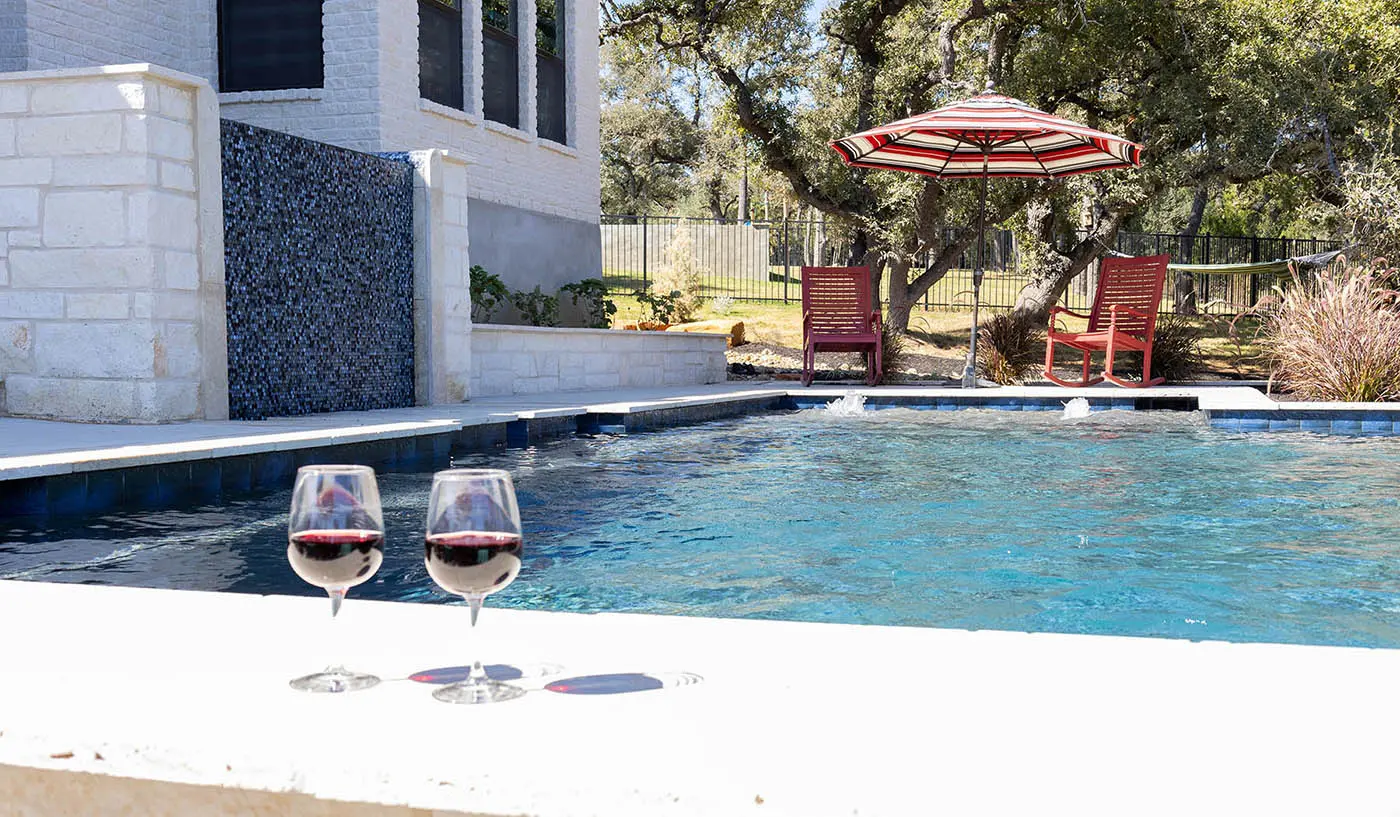
Head-to-Head Summary (what usually decides it)
- Coolest underfoot: Travertine → Pavers → Brushed Concrete (light colors help all three).
- Easiest repairs: Pavers (swap units) = Travertine pieces → Concrete (patching is visible).
- Lowest up-front cost: Brushed Concrete → Pavers → Travertine.
- Premium look: Travertine → Pavers → Brushed Concrete.
- Custom patterns: Pavers win (patterns/borders); Travertine close behind; Concrete needs saw-cuts/borders.
Subgrade, Drainage & Slopes
The Hill Country’s slopes and limestone demand proper base prep, compaction, and drainage. We model elevations in 3D, plan deck slopes, and specify base and edge restraints so your surface stays safe and stable.
FAQ: Pool Decking in San Antonio
Q1: Which decking stays coolest in summer?
Travertine typically feels cooler underfoot than pavers or concrete, especially in lighter colors.
Q2: Do pavers shift over time?
With correct base, compaction, and edge restraints, pavers are stable—and easy to repair by swapping individual units.
Q3: How slippery is travertine when wet?
Choose the right finish/texture (tumbled, chiseled, or honed with texture) and follow slope guidelines for drainage.
Q4: Is brushed concrete too hot for kids?
Dark mixes can run hot in peak sun. Light color and shade planning help; consider travertine near the waterline if budget allows.
Q5: What’s the best value?
For lowest upfront, brushed concrete. For long-term looks and comfort, many homeowners pick travertine or a paver field with stone accents.
Which Should You Choose?
• Prioritizing cool surface + luxury: Travertine
• Want flexible design + easy repairs: Pavers
• Tight budget/simple look: Brushed Concrete
Not sure? We’ll show side-by-side 3D material options in your actual yard so you can compare look, cost, and comfort before you build.


