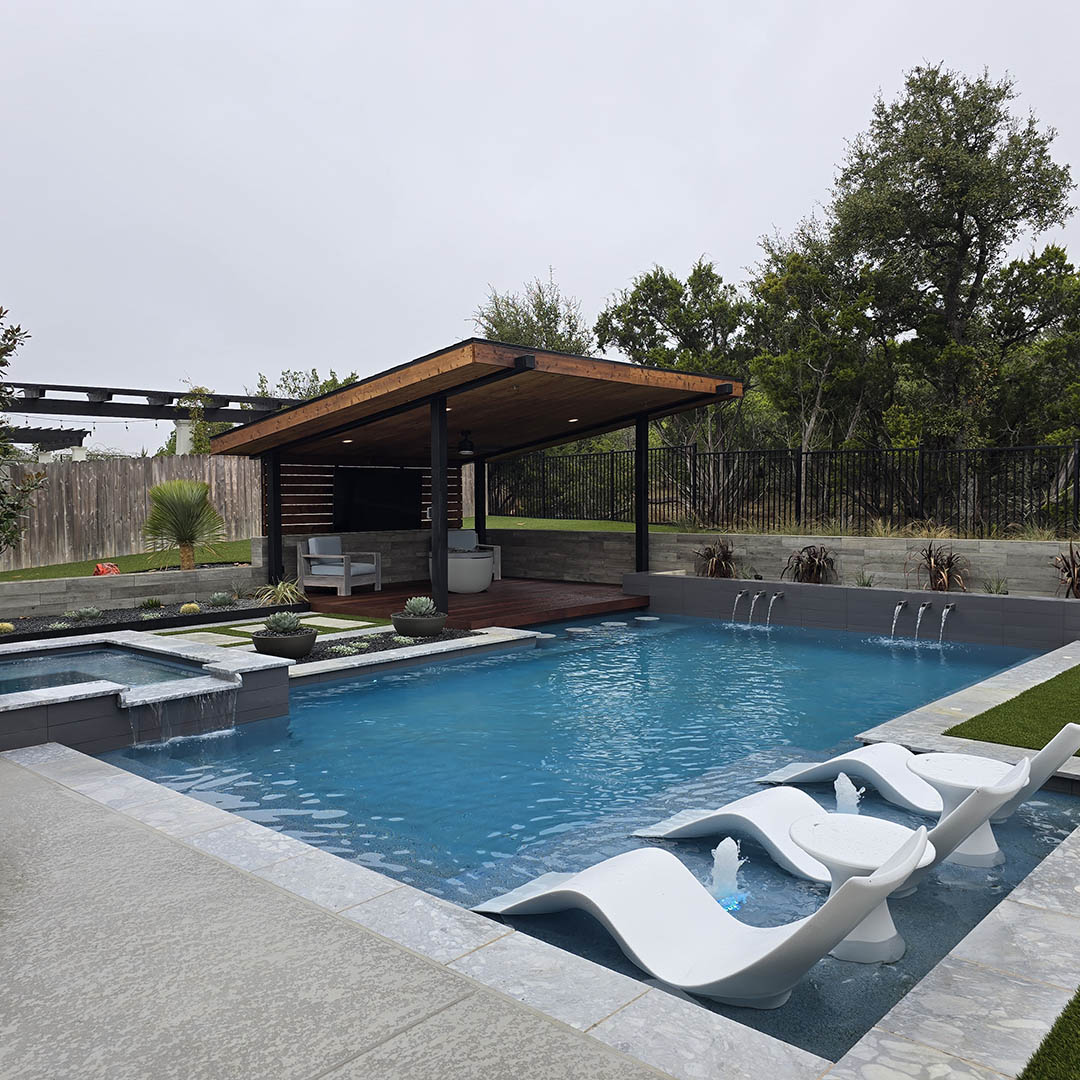
Why This Matters in San Antonio
Summer run-times and rising rates can make pools expensive to operate. The biggest wins come from variable-speed pumps (VSPs), smart automation, and LED lighting. Done right, many owners cut monthly energy use significantly while keeping water crystal clear.
1) Variable-Speed Pumps (VSPs): The #1 Saver
- What they do: Run at lower RPM most of the day—moving the same water with far less electricity.
- Why it works: Pump power draw rises exponentially with speed; a slower, longer run uses less energy than short, high-speed bursts.
Pro tip: During design, size plumbing and filters to support efficient, low-RPM flow.
2) Smart Automation: Schedules That Match Texas Heat
- Daylight circulation: Increase daytime run as temps rise; reduce at night.
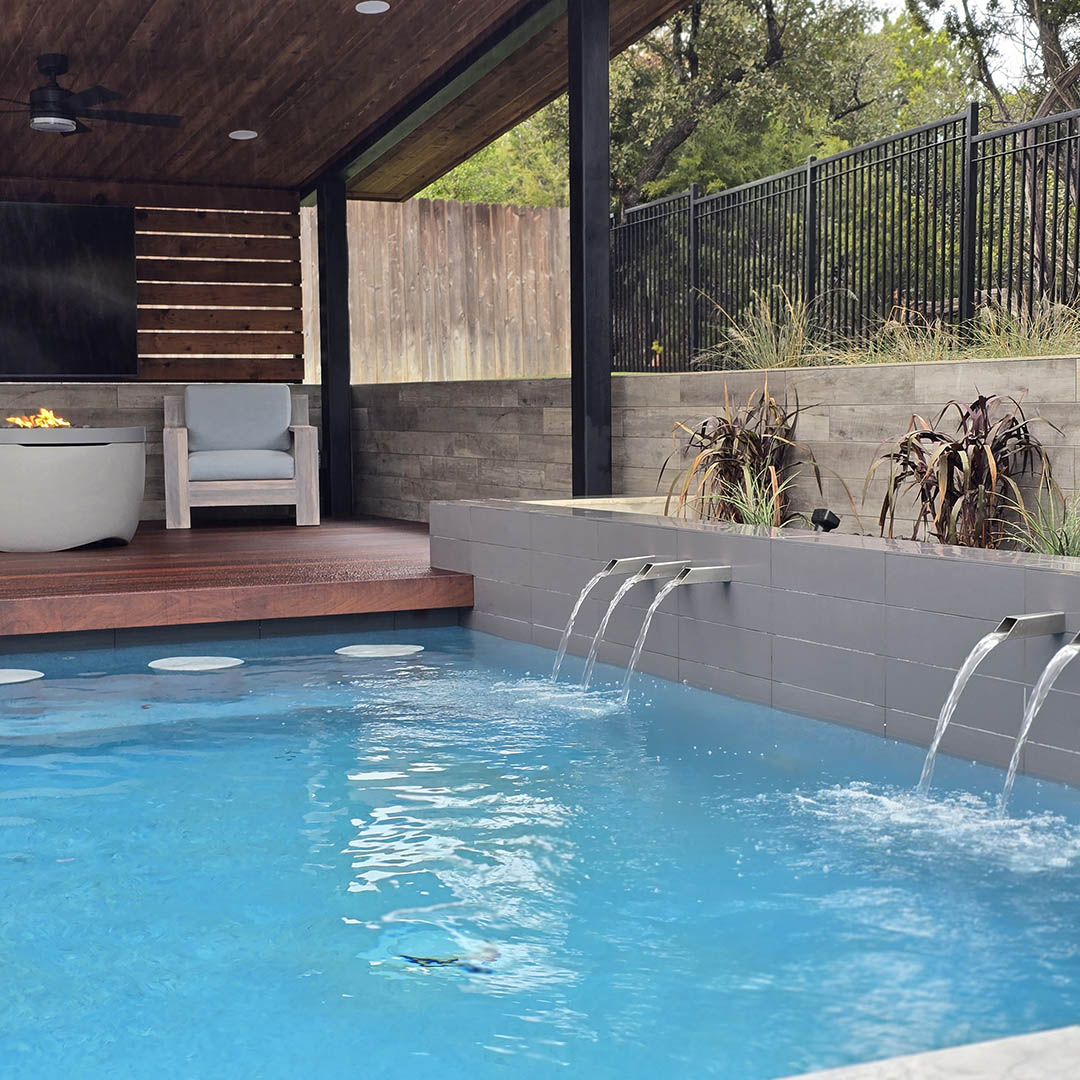
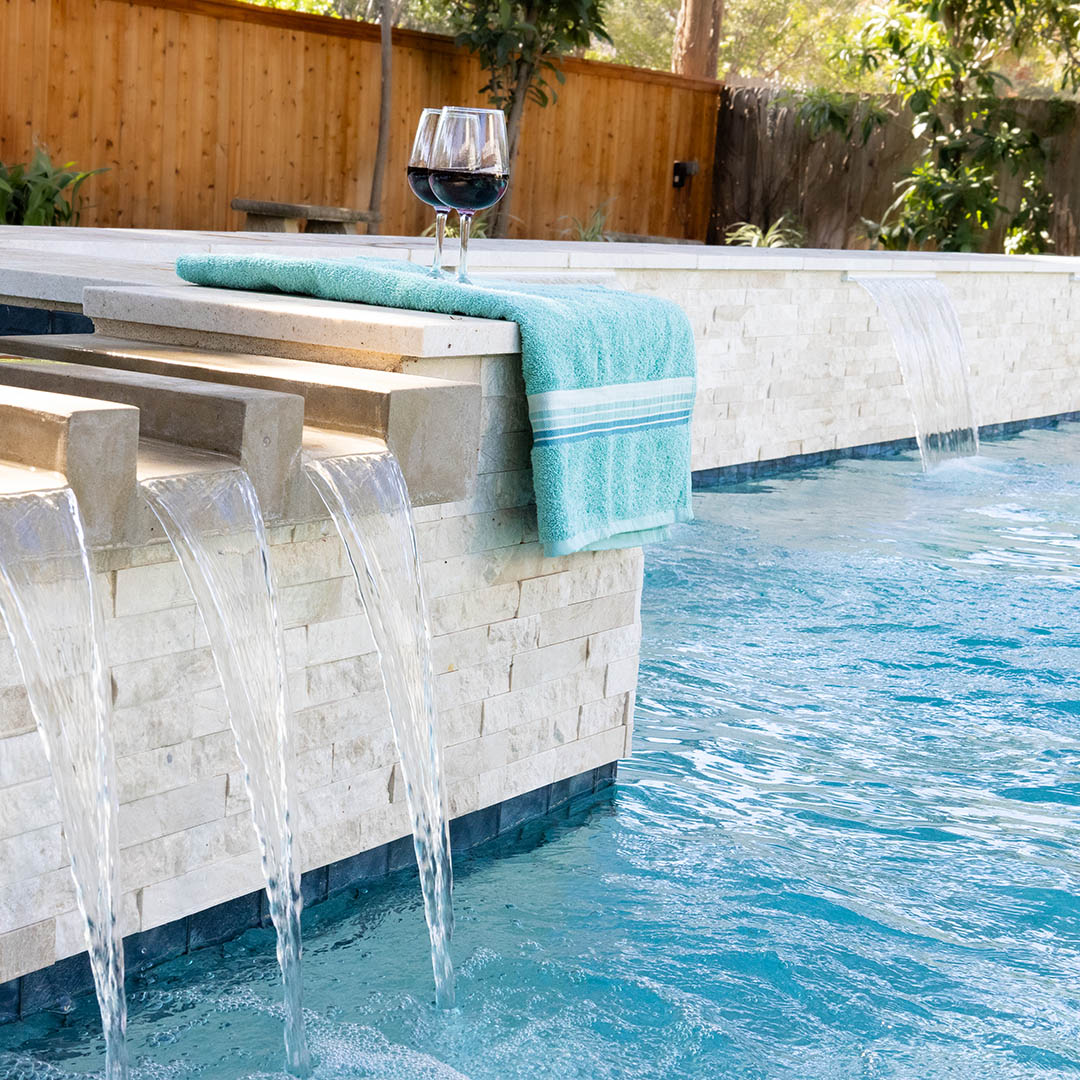
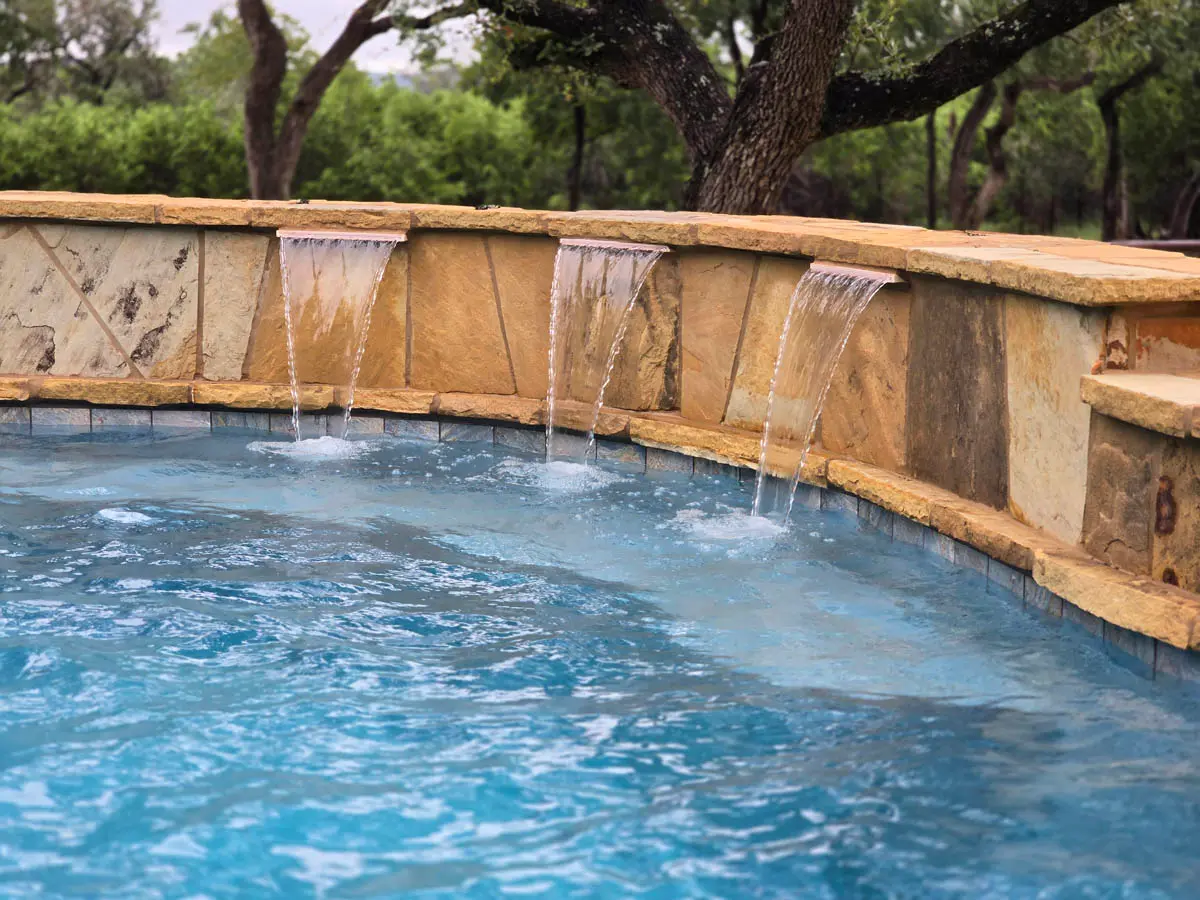
- Feature zoning: Run bubblers and sheers only when you’re outside; keep baseline filtration separate.
- Alerts: Get notified if pressure spikes (dirty filter) or water level drops.
3) Lighting & Extras
- LED pool/landscape lighting: Lower draw, longer life, better night safety.
- Robot vacuums: Clean on off-peak windows instead of running features for debris removal.
- Heaters & chillers: Use covers and scheduled set-points; don’t chase degree-by-degree comfort all day.
Quick Math (why low RPM wins)
Cutting pump speed ~30–50% can slash wattage dramatically while still turning the pool multiple times per day. Result: clear water for less—especially as summer heat hits.
Mini How-To: Set an Energy-Saving Schedule
- Find your minimum flow: Lower RPM until skimming and pressure are effective (note PSI/RPM).
- Create a base schedule: Run low RPM most daytime hours; add a 2–3 hr mid-speed block during peak debris times.
- Separate features: Put bubblers/sheers on a scene so they don’t run all day.
- Tune by temperature: As highs climb, add 1–2 hours to the daytime block.
- Maintain: Backwash/clean filter when pressure rises ~20–25% over baseline—clogged filters waste energy.
Need help dialing it in? Book a service visit for a one-time optimization and seasonal check.
FAQ: Energy-Efficient Pool Setup
Q1: How many hours should I run the pump in summer?
Many San Antonio pools run 8–12 hours/day on low RPM with a short mid-speed block. Adjust for size and debris load.
Q2: Do lower RPMs hurt water clarity?
No—if you maintain total turnover and keep filters clean. Lower RPM is more efficient, not less effective.
Q3: Are LEDs really worth it?
Yes. LEDs cut draw and run cooler, with longer life and better color options for safety and ambience.
Q4: Can automation lower my bill without a VSP?
Some—smart schedules help—but the biggest savings come from a VSP. Automation + VSP is the ideal pair.
Q5: What about water features?
Treat them like “event mode.” Run only when used; keep filtration on a separate, efficient schedule.
Ready to Optimize Your Setup?
We’ll review your equipment pad, set RPM targets, and program schedules so you save all summer.