
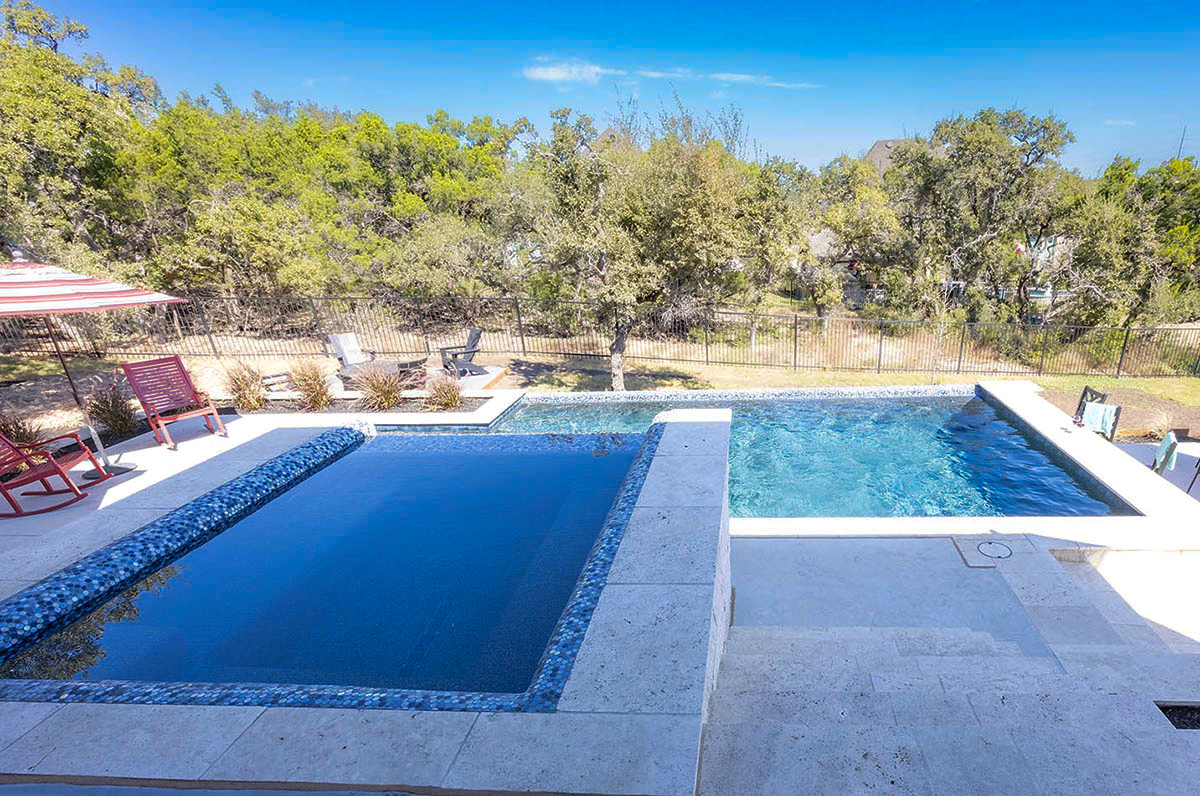
If you’re budgeting for a custom gunite pool in San Antonio, the number you see on ads rarely matches your backyard reality. Why? Because site conditions and finish choices can shift costs more than any single “starting price.” Below are 7 real-world factors that most homeowners don’t see until design day—plus simple ways to keep your investment on track.
1) Access & Staging
Why it matters: Narrow side yards, mature trees, utility meters, and fences can restrict equipment access. When we can’t fit standard machinery, crews spend more time moving material by hand or with compact loaders, which adds labor days and haul-off costs.
How to control it: During design, we plan a temporary access path and sequence deliveries to reduce trips and staging time. Sometimes a short fence panel removal saves thousands compared to specialty equipment.
2) Slope, Limestone & Soil Conditions
Why it matters: The Hill Country’s limestone and elevation changes are beautiful—but they can require over-excavation, soil spoils removal, and added steel/shotcrete in engineered areas. On steep lots, retaining, drainage, and stepped decking may be required to meet code and keep water where it belongs.
How to control it: A site-informed 3D design shows realistic elevations and drainage before we dig. We’ll align the layout to minimize cut/fill and use smart decking transitions so you don’t overbuild concrete.
3) Utilities & Equipment Pad
Why it matters: The distance from pool to equipment pad adds plumbing and electrical run length (materials + labor). Gas lines for heaters/spillover spas, bonding requirements, and panel capacity can influence costs, too.
How to control it: In design, we pick an equipment location with short, serviceable runs and we map gas/electrical early. Where possible, we group utilities along a single path to avoid duplicate trenching.
4) Size, Shape & Depth Profile
Why it matters: Bigger isn’t always better. Volume (gallons), perimeter, and depth transitions all affect steel, shotcrete, plaster, and labor. Complex shapes or sharp transitions can increase formwork and plaster finishing time.
How to control it: Start with a use-case brief (how you’ll actually swim). A right-sized pool with a functional shallow area can reduce cost and ongoing maintenance without sacrificing the experience.
5) Features That Add Engineering
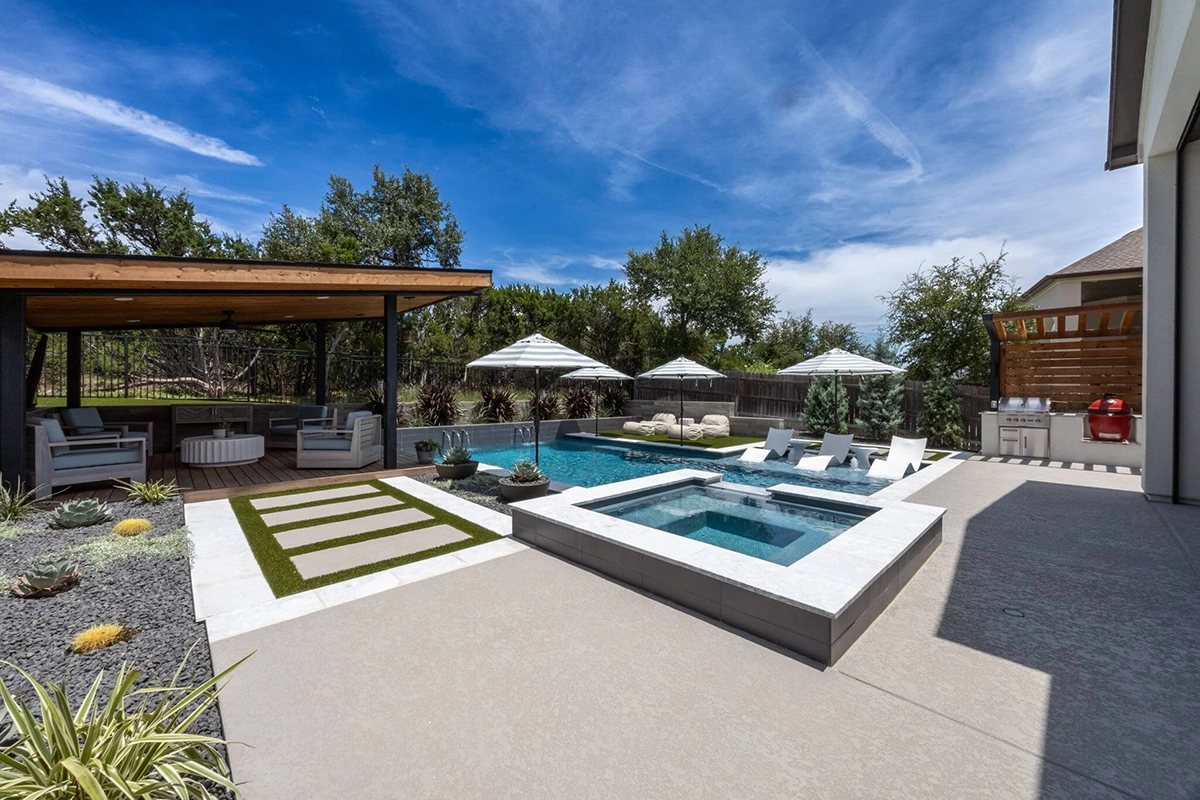
Why it matters: Ledges, integrated spas, vanishing edges, boulder waterfalls, and grottos often require extra steel, plumbing, and pumps. These features look effortless in photos but need thoughtful structure and hydraulics.
How to control it: Prioritize 1–2 features that deliver the most enjoyment (e.g., a tanning ledge + spa) and use pre-plumbed stubs for future add-ons. You’ll get the look you want now, with room to grow later.
6) Materials & Finishes (Where Most Budgets Drift)
Why it matters: Waterline tile, interior finish (plaster/pebble/quartz), coping, and decking (travertine, pavers, brushed concrete) can swing totals widely. It’s not just material cost—cuts, curves, and patterns add install time.
How to control it: Select a cohesive palette early. We’ll show you good/better/best options in design so you know where upgrades have the biggest visual impact (often tile, lighting, and selective accent stone).
7) Permits, HOA & Timeline (The Clock Is Money)
Why it matters: San Antonio permits, inspections, and HOA approvals can introduce scheduling gaps. Seasonal demand (late spring) can also extend timelines, which affects interim costs like temporary fencing or yard protection.
How to control it: Submit complete permit/HOA packages from a build-ready 3D plan. If possible, start design and approvals ahead of peak season to lock a smoother build window.
What Does a “Typical” Custom Pool Cost?
Every yard is different, but many gunite projects in the region start in the high-five to low-six figures depending on the combinations above. The fastest way to see your range is with a 3D design consult—we’ll model your lot, show materials, and outline a clear number that fits your goals.
How to Keep Your Budget on Track (3 Practical Tips)
- Design for access first. A few inches of clearance can remove whole line items.
- Choose 1–2 hero features. Concentrate wow-factor where you’ll use it most.
- Lock materials early. Avoid late-stage swaps; they multiply change orders.

FAQ: Custom Pool Pricing in San Antonio
Q: Is gunite more expensive than fiberglass?
Generally yes, but gunite is fully customizable, handles slopes/limestone better, and lasts longer with proper care.
Q: How does a tanning ledge affect cost?
Ledges add steel/shotcrete and plumbing for bubblers; the impact depends on size and shape. They’re one of the highest-value features for families.
Q: Can we phase features over time?
Yes. We often pre-plumb for future water features, heaters, or automation so you can add later without re-digging.
Q: What’s the most budget-friendly decking?
Brushed concrete is typically most economical; travertine and pavers increase cost but run cooler and elevate the look.
Q: How long does permitting take in San Antonio?
Timelines vary, but we prep complete submittals to shorten review cycles and keep construction on schedule.
Ready to See Your Backyard in 3D?
Schedule a quick consult. We’ll measure, model, and show you a build-ready plan—no surprises on cost and a timeline you can plan around.


